
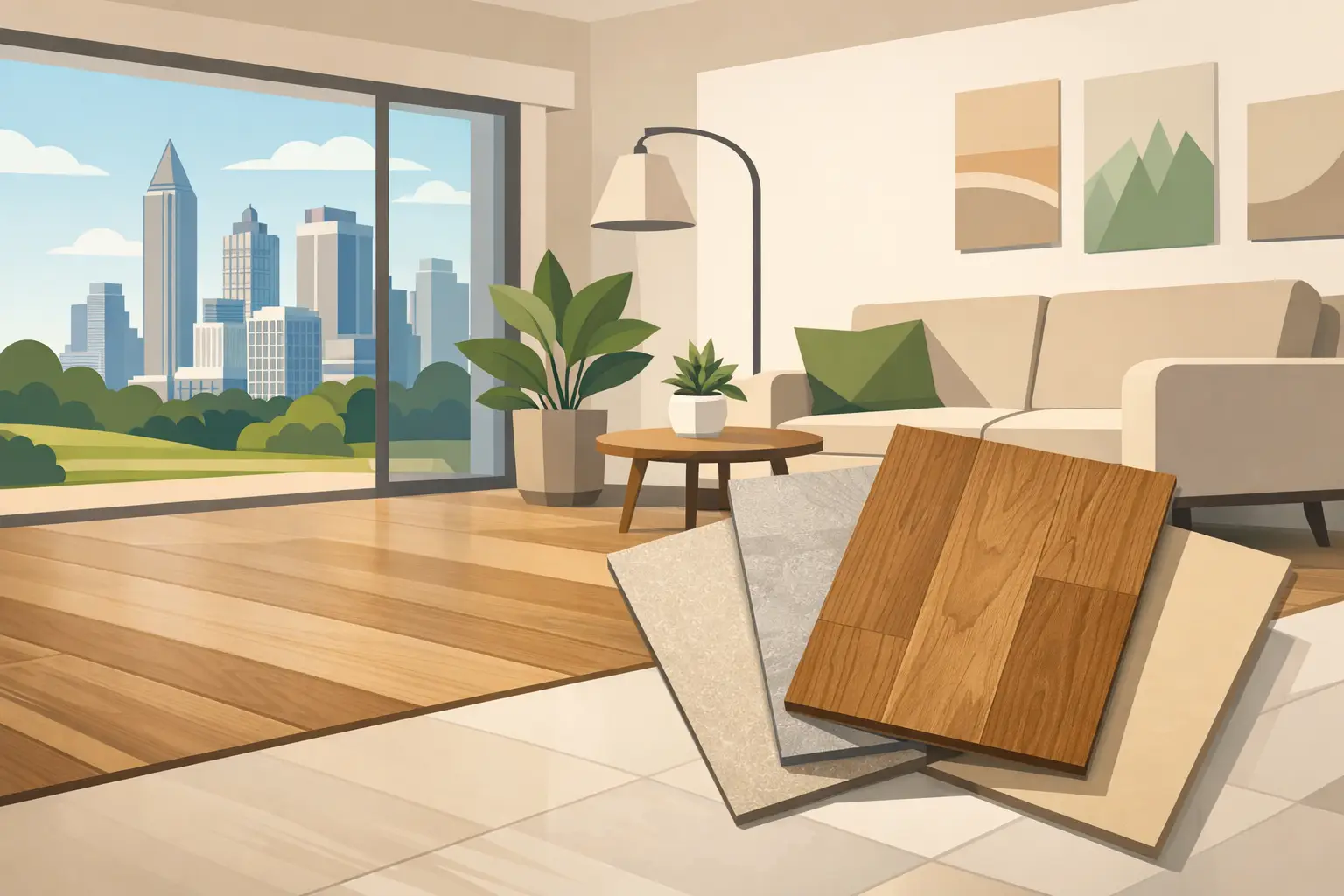
Atlanta homes ask a lot of their floors. Red Georgia clay comes in on shoes, humidity affects indoor materials, pets scratch surfaces, and busy families need rooms that look clean without constant work. The best low maintenance flooring is not simply the material that hides dirt. It is the one that fits the room, handles daily traffic, and gives you a finish you will still be happy with years from now.
For most Metro Atlanta homeowners, luxury vinyl plank and porcelain tile lead the list. Both are durable, easy to clean, and available in styles that work in older homes, new construction, rentals, and commercial spaces. Still, every flooring choice has trade-offs. The right answer depends on moisture exposure, subfloor condition, budget, comfort, and how you use the space.
What Makes Flooring Low Maintenance?
A low-maintenance floor should handle normal life with basic care: regular sweeping or vacuuming, occasional mopping, and prompt cleanup when spills happen. It should not require routine refinishing, specialty cleaners, frequent sealing, or careful protection from every wet shoe and dropped toy.
The best options usually share a few qualities. They resist water, do not trap stains easily, stand up to foot traffic, and have a finish that does not show every scratch or speck of dust. Texture and color matter, too. A light, solid-colored glossy floor may look sharp in a showroom but reveal more daily mess than a wood-look finish with natural variation.
Installation matters just as much as the product. A durable floor can still fail if moisture issues, uneven subfloors, weak transitions, or poor preparation are ignored. Details matter, especially in kitchens, bathrooms, laundry rooms, and entryways.
Best Low Maintenance Flooring Options
Luxury Vinyl Plank: Best All-Around Choice
Luxury vinyl plank, often called LVP, is one of the most practical flooring options for busy households. It gives homeowners the look of hardwood while offering better resistance to water, scuffs, and everyday wear. It is a strong choice for living rooms, hallways, bedrooms, kitchens, and many finished basements.
Most LVP only needs sweeping and damp mopping with a manufacturer-approved cleaner. It is softer and warmer underfoot than tile, which makes a difference in spaces where people stand often. It also works well when you want consistent flooring through most of the house without the upkeep associated with natural hardwood.
The trade-off is that not all vinyl is built the same. Thin budget products may dent, separate at seams, or telegraph imperfections in the subfloor. Look beyond color alone. Wear-layer thickness, core construction, warranty terms, and proper floor prep all affect long-term performance. For homes with large dogs, active kids, or frequent guests, a quality product is worth the planning.
Porcelain Tile: Best for Water and Heavy Use
Porcelain tile is one of the toughest flooring materials available for residential use. It is ideal for bathrooms, laundry rooms, mudrooms, kitchens, screened porches, and commercial areas where water, dirt, and heavy foot traffic are expected. Unlike many materials, porcelain does not swell when it gets wet.
A properly installed porcelain tile floor can last for decades. Routine care is simple: sweep away grit and mop as needed. Modern tile also comes in convincing wood-look, stone-look, and concrete-look finishes, so homeowners are not limited to traditional square tile.
Tile does have practical considerations. It is harder and cooler underfoot than vinyl, and it can feel less comfortable in bedrooms or living areas. Grout joints need attention, even when sealed, because light grout can stain or discolor over time. Choosing a medium or darker grout color, a quality grout product, and an appropriate tile texture can reduce visible upkeep.
Laminate Flooring: A Budget-Friendly Option for Dry Areas
Modern laminate has improved significantly in appearance and durability. It can be a good low-maintenance choice for bedrooms, offices, dining rooms, and living spaces where moisture is limited. It resists scratches better than many softer wood floors and is generally easy to clean with a dry mop, vacuum designed for hard surfaces, or lightly damp microfiber mop.
Laminate is often less expensive than premium LVP or tile, making it useful for homeowners updating several rooms on a defined budget. It also offers a wide range of wood looks without the regular maintenance of site-finished hardwood.
Its limitation is water. Even water-resistant laminate has seams and edges that can be damaged by standing moisture. It is not the first choice for full bathrooms, laundry rooms, or homes with frequent leaks near exterior doors. If you want one floor throughout a moisture-prone first level, vinyl is usually the safer option.
Polished or Sealed Concrete: Best for Modern, Durable Spaces
Concrete is a practical option for slab-on-grade homes, basements, garages, workshops, and certain commercial spaces. When properly polished or sealed, it is easy to clean, highly durable, and well suited to a modern or industrial design. It does not need replacement due to pet scratches or routine foot traffic.
Concrete can also help reduce material costs when an existing slab is in good condition. However, the condition of that slab should be evaluated before making design decisions. Cracks, moisture transmission, old adhesives, and uneven areas may need repair or preparation.
The main trade-off is comfort. Concrete is hard underfoot and can feel cool, particularly during winter. Area rugs can help in living spaces, but rugs should be selected with non-staining backings that are safe for the finished surface.
Flooring Choices That Need More Care
Natural hardwood remains a beautiful investment, but it is not usually the lowest-maintenance option. It can scratch, dent, and react to changing humidity levels. Refinishing may eventually be needed, particularly in high-traffic areas. For homeowners who value authentic wood and accept the maintenance, it can still be the right choice. It just requires realistic expectations.
Carpet also has a place in bedrooms and upstairs spaces where warmth and sound control matter. But it holds allergens, pet hair, spills, and odors more easily than hard-surface flooring. Even stain-resistant carpet benefits from regular vacuuming and professional cleaning. For a rental property or a home with pets, hard flooring is often easier to manage between tenants or over time.
Natural stone offers a premium look, but some stone materials require periodic sealing and more careful cleaning. Acidic or harsh cleaners can damage certain surfaces. If the goal is a stone appearance with simpler upkeep, porcelain tile is often the more practical alternative.
Match the Floor to the Room
A single flooring type can create a clean, connected look, but it is not always the smartest decision for every room. Bathrooms and laundry rooms need stronger moisture protection than bedrooms. Entryways need surfaces that can handle grit and wet shoes. Kitchens need a floor that stands up to spills, dropped dishes, and long periods of standing.
For many Atlanta homes, LVP works well across main living areas and bedrooms, while porcelain tile makes sense in bathrooms, laundry areas, and mudrooms. That combination balances comfort, durability, and maintenance without forcing one product into a room where it does not perform well.
Landlords may prioritize a durable, easy-to-replace product with broad appeal. Families may care more about warmth underfoot and water resistance. A homeowner renovating an older house may need to address floor height changes, damaged subfloors, or transitions between existing rooms before selecting materials. These details should be part of the scope from the start, not surprises discovered after installation begins.
Do Not Overlook Subfloor Preparation
Low maintenance starts below the visible floor. A flat, clean, dry, and structurally sound subfloor gives new flooring the support it needs. Skipping preparation can lead to clicking sounds, cracked tile, lifted planks, uneven joints, and early wear.
Before installation, check for moisture concerns, soft spots, old adhesive, damaged plywood, and uneven concrete. In a remodel, flooring work may also involve removing old materials, adjusting doors, replacing baseboards, repairing trim, or planning smooth transitions into adjacent rooms. A clear estimate should explain which of these items are included.
At Plus Home Investment, we listen first, inspect the space, and help homeowners choose a practical flooring plan that matches the way they live. Quality craftsmanship is visible in the finished surface, but it begins with preparation that is done correctly.
Choose a Finish That Makes Daily Care Easier
The easiest floor to maintain is one that does not advertise every mark. Mid-tone colors, wood-grain variation, matte finishes, and lightly textured surfaces tend to hide dust and minor scratches better than high-gloss or very dark solid colors. This does not mean your floor has to look busy. It means selecting a finish that works with real life, not just a small sample board.
Ask to see larger samples in your home when possible. Look at them near windows, in artificial light, and beside your cabinets, paint colors, and furniture. Consider where your pets sleep, where children enter from outside, and where water is most likely to land. A few extra minutes of planning can prevent years of frustration.
A dependable floor should make your home easier to enjoy, not give you another surface to worry about. Start with the room’s demands, choose a material that can meet them, and make sure the installation plan covers the details beneath your feet.