
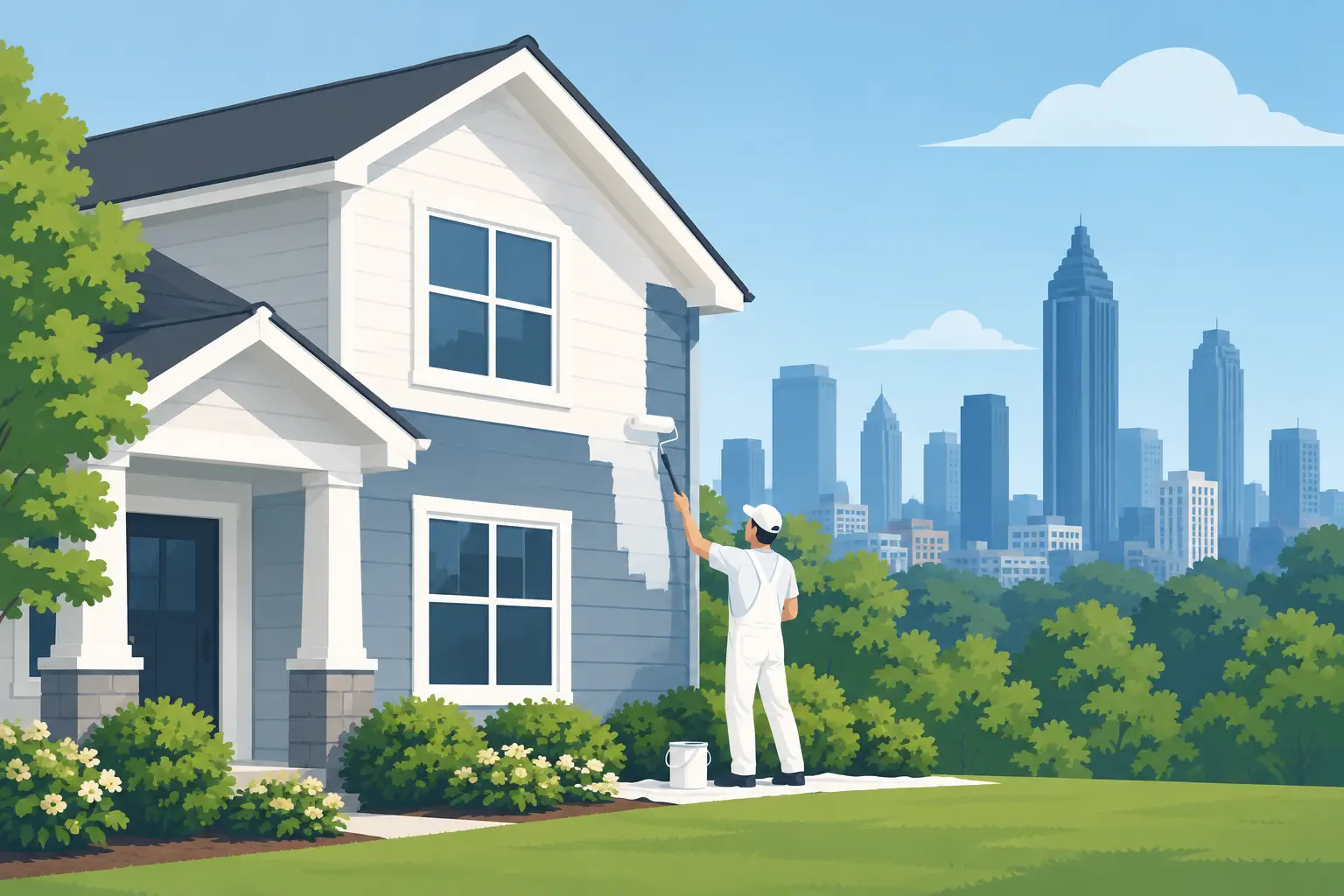
Peeling trim, chalky siding, and faded shutters are more than curb-appeal issues. In Metro Atlanta, exterior painting is a working layer of protection between your home and heat, humidity, hard rain, pollen, and seasonal temperature changes. A good paint job makes the property look cared for. A properly prepared one also helps protect the wood, fiber cement, stucco, or masonry underneath.
The difference comes down to the work before the paint goes on. Fresh color can look good for a short time even when surfaces were not cleaned, damaged areas were ignored, or the wrong coating was selected. Those shortcuts tend to show up quickly as blistering, peeling, mildew staining, and costly repairs.
What Exterior Painting Really Includes
Exterior painting is not simply choosing a color and coating the walls. Every home needs an evaluation of its existing condition first. That means looking for loose paint, failed caulk, soft wood, cracked siding, gaps around trim, rusted metal, mildew, and moisture-prone areas.
On many Atlanta homes, the trouble spots are around window trim, fascia boards, soffits, porch columns, deck connections, and garage door frames. These areas receive repeated moisture exposure and may need repairs before painting begins. Covering damaged wood does not fix it. In some cases, replacing a small section now is the practical way to avoid a larger repair later.
A clear scope should identify what will be washed, scraped, sanded, caulked, primed, repaired, and painted. It should also explain which surfaces are included. Siding, trim, doors, shutters, railings, fences, and masonry do not always require the same products or preparation. Clear details help prevent surprises once the project is underway.
Why Preparation Determines How Long Paint Lasts
Paint needs a clean, stable surface to bond correctly. If dirt, pollen, mildew, or loose paint remains underneath, the new coating is only attached to a failing layer. It may look finished on day one, but it is more likely to fail early.
Pressure washing is often part of preparation, but it must be done correctly. Too much pressure can drive water behind siding, damage soft wood, or leave marks on delicate surfaces. The goal is to remove surface buildup and mildew without creating another problem. After washing, the exterior needs enough time to dry before coatings are applied.
Scraping and sanding remove loose paint and smooth rough transitions between old and bare areas. Caulking closes small gaps where water can enter around trim, joints, and penetrations. Quality exterior primer is then used where bare wood, repaired areas, metal, or other exposed surfaces need a reliable base coat.
These steps take time, and that is the point. A lower estimate may leave out needed preparation, while a higher price is not automatically proof of better work. Ask what is included, how repairs are handled, and whether the contractor will identify conditions that could affect the result before work starts.
Repairs Should Come Before the Finish Coat
Paint can help seal and protect sound material, but it cannot restore rotted wood or correct an active water problem. If trim is soft, a gutter is overflowing, or a window is allowing moisture behind the siding, address the cause first. Otherwise, the same issue may return through the new paint.
This is where a full-scope contractor can be useful. A painting project may reveal carpentry repairs, pressure washing needs, porch maintenance, or damaged exterior trim. Coordinating those items through one local team can reduce handoffs and keep the work moving in the right order.
Choosing Paint for Metro Atlanta Conditions
Metro Atlanta weather asks a lot of exterior coatings. Long periods of sun can fade darker colors and wear down exposed surfaces. Humidity supports mildew growth, especially on shaded sides of the home. Heavy rain tests caulk lines, trim joints, and the condition of the siding itself.
The right product depends on the surface. Wood trim, fiber-cement siding, stucco, brick, metal railings, and doors each have different needs. A coating that performs well on siding may not be the best choice for a high-touch front door or a metal handrail. Product selection should follow the surface and its condition, not just the color card.
Color also affects maintenance. Deep colors can make a bold statement, but they may show fading more noticeably in direct sun. Very light colors can show red clay splatter, mildew, and pollen staining. There is no single best choice. A practical color plan considers the home’s architecture, surrounding landscape, sun exposure, and how much maintenance you are comfortable with.
For homes with existing paint, compatibility matters. Applying the wrong product over a previous coating can lead to adhesion problems. A contractor should assess the current surface, test questionable areas when needed, and use primers and topcoats designed to work together.
When to Schedule Exterior Painting
Dry conditions and reasonable temperatures create the best painting window. Spring and fall are often popular times in Atlanta because conditions can be more predictable, but exterior work can be completed in other seasons when weather allows.
The calendar matters less than the actual forecast and surface condition. Paint should not be applied to wet surfaces or when rain is expected before the coating has time to cure. Extreme heat can also create problems, especially when a surface is in direct afternoon sun. Paint may dry too quickly, making it harder to achieve an even finish and proper bonding.
A professional crew plans around those conditions. That may mean starting on the shaded side of the house, shifting work as the sun moves, or pausing when rain threatens. A project schedule should be realistic rather than rushed. The right timing protects the finish and the investment behind it.
Signs Your Home May Be Ready for Exterior Painting
Not every faded wall needs immediate attention, but certain conditions should not be ignored. Look closely at areas near rooflines, windows, doors, and ground-level trim. If the coating is no longer doing its job, moisture can reach the material below.
Common signs include:
- Peeling, cracking, bubbling, or flaking paint
- Exposed bare wood or wood that feels soft to the touch
- Chalky residue that comes off on your hand
- Persistent mildew or dark staining on shaded walls
- Open caulk joints around trim, windows, and doors
- Fading or uneven color that makes the property look neglected
For landlords and small commercial property owners, early maintenance is especially practical. Keeping exterior surfaces in good condition can support tenant confidence, protect the property’s appearance, and help avoid turning small repairs into larger disruptions.
What to Expect From a Well-Managed Project
A dependable exterior painting project starts with listening. You should be able to explain what concerns you, whether it is peeling siding, a planned color change, a home sale, or overdue maintenance. The estimate should turn those concerns into a clear scope with realistic expectations for repairs, preparation, materials, timing, and cleanup.
Before work begins, protect the areas around the home. Landscaping, walkways, outdoor furniture, windows, and fixtures all need attention. Good crews keep the site organized and communicate if access, weather, or hidden damage changes the plan.
During the job, visible quality matters. Straight cut lines, even coverage, clean trim, properly sealed joints, and careful cleanup are not extras. They are part of a professional finish. Just as important, the homeowner should not have to chase down answers. Regular communication keeps decisions clear from the first walk-through to the final review.
Plus Home Investment approaches exterior work with that practical standard: assess the condition, explain the scope, complete the preparation, and pay attention to the details that remain visible long after the crew leaves. With more than 10 years of hands-on experience, the goal is a finish that looks right and performs as it should.
Start With the Condition of Your Home
The best time to plan exterior painting is before damaged paint exposes wood or moisture finds an easy path behind the trim. A free, no-obligation estimate gives you a chance to understand the condition of the exterior, prioritize repairs, and make a decision based on a clear scope rather than a guess.
If your home is showing wear, take a close look after the next dry day. A few peeling boards or open caulk lines may be manageable now. Addressing them with the right preparation and workmanship can keep your exterior protected, polished, and ready for the seasons ahead.