
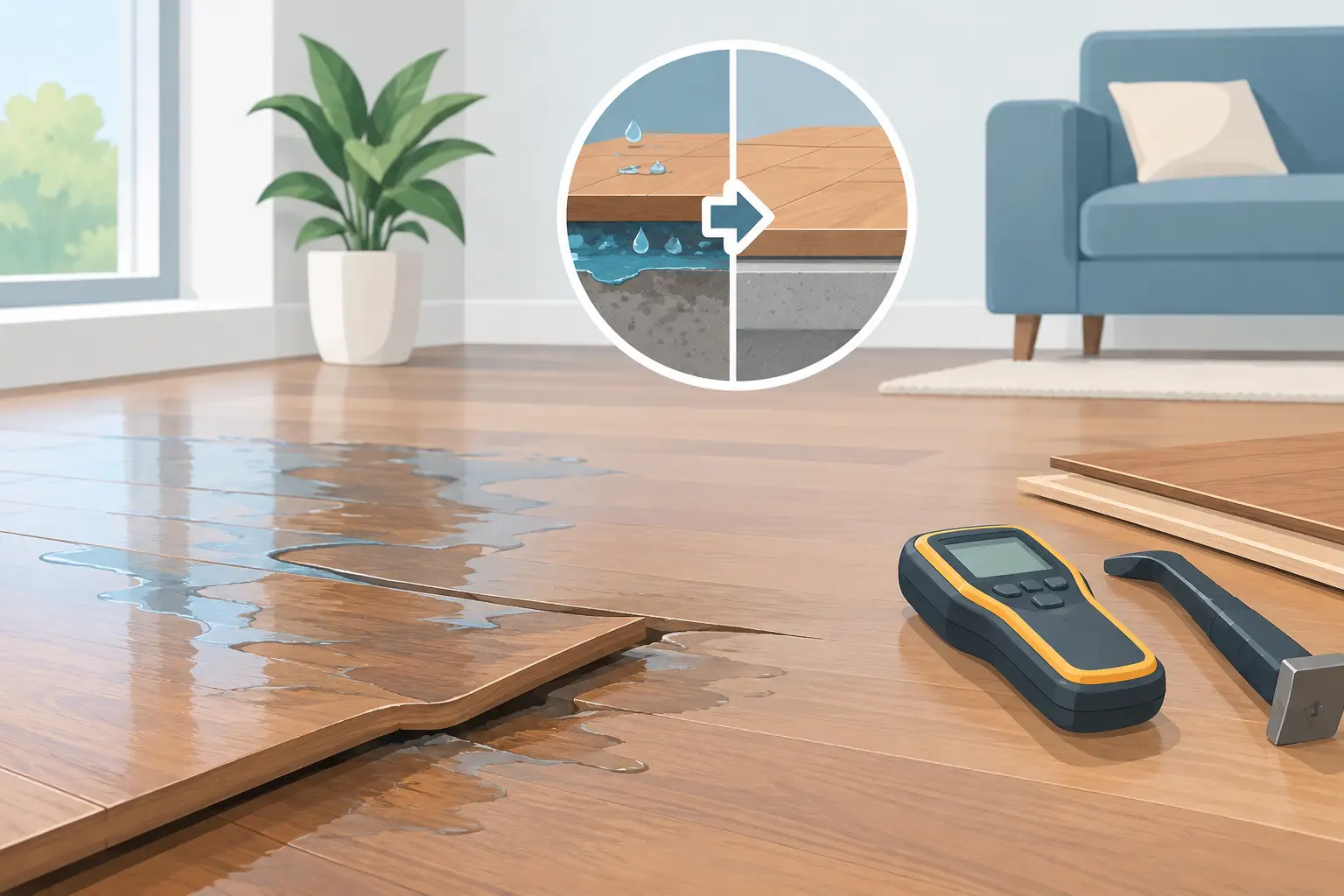
A new floor can look perfect on installation day, then begin cupping, separating, staining, or lifting weeks later. Flooring moisture problems often start below the surface, where a homeowner cannot see the source until the damage is already spreading. In Metro Atlanta, humid summers, crawl spaces, slab foundations, plumbing leaks, and storm-driven water can all put flooring materials under stress.
The right repair is not always replacing the floor. Sometimes the floor is the visible symptom of a moisture issue that needs to be corrected first. A dependable plan identifies where the water is coming from, checks how far it has traveled, allows the area to dry properly, and then repairs or replaces materials that cannot be saved.
What Causes Flooring Moisture Problems?
Moisture reaches flooring in more than one way. A dishwasher line may leak slowly beneath a kitchen floor. A toilet seal can fail around the base. A roof or exterior wall leak can travel behind drywall before it reaches the subfloor. In homes with crawl spaces, humid air and ground moisture can rise through the framing and affect hardwood, laminate, and engineered flooring above.
Concrete slabs create a separate concern. Concrete holds moisture for a long time, especially after heavy rain, plumbing repairs, or new construction. If flooring is installed before the slab is dry enough or without the right moisture barrier, adhesives can fail and planks can release, curl, or shift.
Not every change in a floor means there is a current leak. Solid hardwood naturally expands and contracts with changing humidity. Small seasonal movement may be normal. Wide gaps, severe cupping, loose boards, persistent odors, or recurring damage are not normal and deserve a closer look.
Common trouble spots in Atlanta homes
Bathrooms, laundry rooms, kitchens, entryways, and basements are obvious risk areas, but they are not the only ones. Older homes may have worn plumbing connections, inadequate crawl space vapor barriers, or exterior drainage that directs water toward the foundation. Newer homes can also have issues when a material was installed too quickly, the subfloor was not tested, or a transition detail leaves an edge exposed to water.
A floor near an exterior door may be reacting to wind-driven rain. Damage along one wall can point to a plumbing line, window leak, or exterior moisture intrusion. The location and pattern matter. Good repair work starts with those details instead of assuming the flooring itself is the only problem.
Signs Your Floor Has a Moisture Issue
Early action can limit the size and cost of a repair. Pay attention when the floor feels different underfoot or begins changing appearance. Hardwood may cup, meaning the edges of boards rise higher than the center. It may also crown, where the center rises higher than the edges, often after a wet floor has been sanded before it fully dried.
Laminate and engineered flooring can swell at seams, develop raised edges, or separate at joints. Vinyl plank flooring may lift, curl, or show adhesive failure. Tile can loosen when the substrate beneath it moves or deteriorates from ongoing moisture. Carpet may feel damp, smell musty, or show staining along walls and near appliances.
Other warning signs can appear outside the flooring itself. Watch for peeling baseboards, soft trim, discolored drywall, a musty smell, mold growth, or a sudden increase in indoor humidity. If the floor has become soft or spongy, avoid treating it as a cosmetic issue. The subfloor or framing may need repair.
Find the Water Source Before Replacing the Floor
Replacing damaged material without correcting the moisture source usually creates the same problem twice. Before a new floor is selected, the affected area should be evaluated for active leaks, trapped moisture, and damage below the finish surface.
A practical inspection may include checking appliance supply lines, drain connections, toilet seals, shower plumbing, nearby windows and doors, roof penetrations, and exterior grading. In crawl space homes, the vapor barrier, standing water, ventilation approach, and condition of the floor framing should be reviewed. On a slab, moisture testing helps determine whether the concrete is suitable for the planned flooring system.
This is where a focused scope protects the budget. A small localized leak caught quickly may require drying, replacing a section of subfloor, and repairing matching flooring. A long-term leak may call for plumbing work, mold-safe cleanup, framing repairs, new underlayment, baseboard replacement, and a larger flooring installation. The scope depends on what is wet, how long it has been wet, and whether the structure remains sound.
Drying comes before finish work
A floor should not be closed back up just because it looks dry. Moisture can remain in wood framing, subflooring, and wall cavities. Rushing new materials into a damp area can trap moisture and lead to mildew, warped flooring, or adhesive problems later.
Drying may involve removing affected flooring, improving airflow, using appropriate drying equipment, and allowing enough time for materials to stabilize. Moisture readings are more useful than guesswork, particularly with wood subfloors and concrete. If mold is visible or the affected area is extensive, the situation may require specialized remediation before reconstruction begins.
Repair or Replace? It Depends on the Material
Some floors can recover after moisture exposure. Others cannot. Solid hardwood may flatten as moisture levels return to normal, but boards that are badly warped, stained, split, or loosened often need replacement. Sanding can be an option only after the wood is fully dry and stable. Sanding too early can make cupping look worse.
Engineered hardwood has a thinner wear layer and may be less forgiving after significant water exposure. Laminate is commonly replaced when its core swells because it rarely returns to its original shape. Luxury vinyl plank resists surface water well, but water can still reach the subfloor through seams, perimeter gaps, or an unsealed edge. Tile may survive a leak, while the underlayment, grout, or wood structure below it may not.
Matching an existing floor is another factor. If only a few boards are affected and the original product is still available, a targeted repair can preserve the room. If the product is discontinued, fading has changed its color, or damage covers a wide area, replacement may provide a cleaner and more durable finish.
Prevent Future Flooring Moisture Problems
Prevention is usually less expensive than a second flooring project. Start by responding quickly to spills and leaks, especially around refrigerators, dishwashers, washing machines, toilets, and water heaters. Do not let wet rugs, towels, or pet accidents sit on wood or laminate flooring for extended periods.
Keep indoor humidity as consistent as practical. During Atlanta's humid months, air conditioning and properly sized dehumidification can help protect wood flooring. In winter, very dry indoor air can create gaps in hardwood. The goal is steady conditions rather than extreme swings.
Outside the home, make sure gutters, downspouts, and grading move water away from the foundation. A clean, well-managed crawl space can make a major difference in the rooms above it. For bathrooms and kitchens, quality caulking, sound plumbing connections, and properly installed transitions help keep routine water exposure from reaching the subfloor.
When installing new flooring, choose a material that fits the room. Hardwood can be a beautiful choice for living spaces but may not be the best fit for a frequently wet bathroom. Vinyl, porcelain tile, and other water-tolerant options can make more sense in certain areas, provided the subfloor and installation system are prepared correctly.
Plan the Repair With the Whole Home in Mind
Flooring work often connects to other repairs. A bathroom leak may involve tile, a vanity, drywall, trim, plumbing, and flooring. A crawl space moisture issue may require attention to drainage and damaged framing before the finished floor is touched. Coordinating those steps helps prevent gaps between trades and keeps the repair sequence clear.
At Plus Home Investment, the goal is to listen first, inspect the visible conditions, and build a practical scope around the source of the problem and the finish you want to restore. Clear communication matters when a project involves both repair work and flooring replacement.
If you notice movement, staining, soft spots, or a musty odor, take a few photos and note when and where the change began. That simple record can help identify the cause faster and give your home a better chance of a lasting repair.