
A new floor changes how a room feels before a single piece of furniture moves back in. But hardwood versus laminate flooring is not simply a question of which one looks better. For Metro Atlanta homeowners, the right choice depends on the room, the condition of the subfloor, household traffic, moisture exposure, budget, and how long you plan to keep the property.
Both materials can deliver a clean, attractive finish when they are selected and installed correctly. They are not interchangeable, though. Understanding where each one performs well helps prevent a flooring decision that looks good on day one but creates frustration later.
Hardwood Versus Laminate Flooring at a Glance
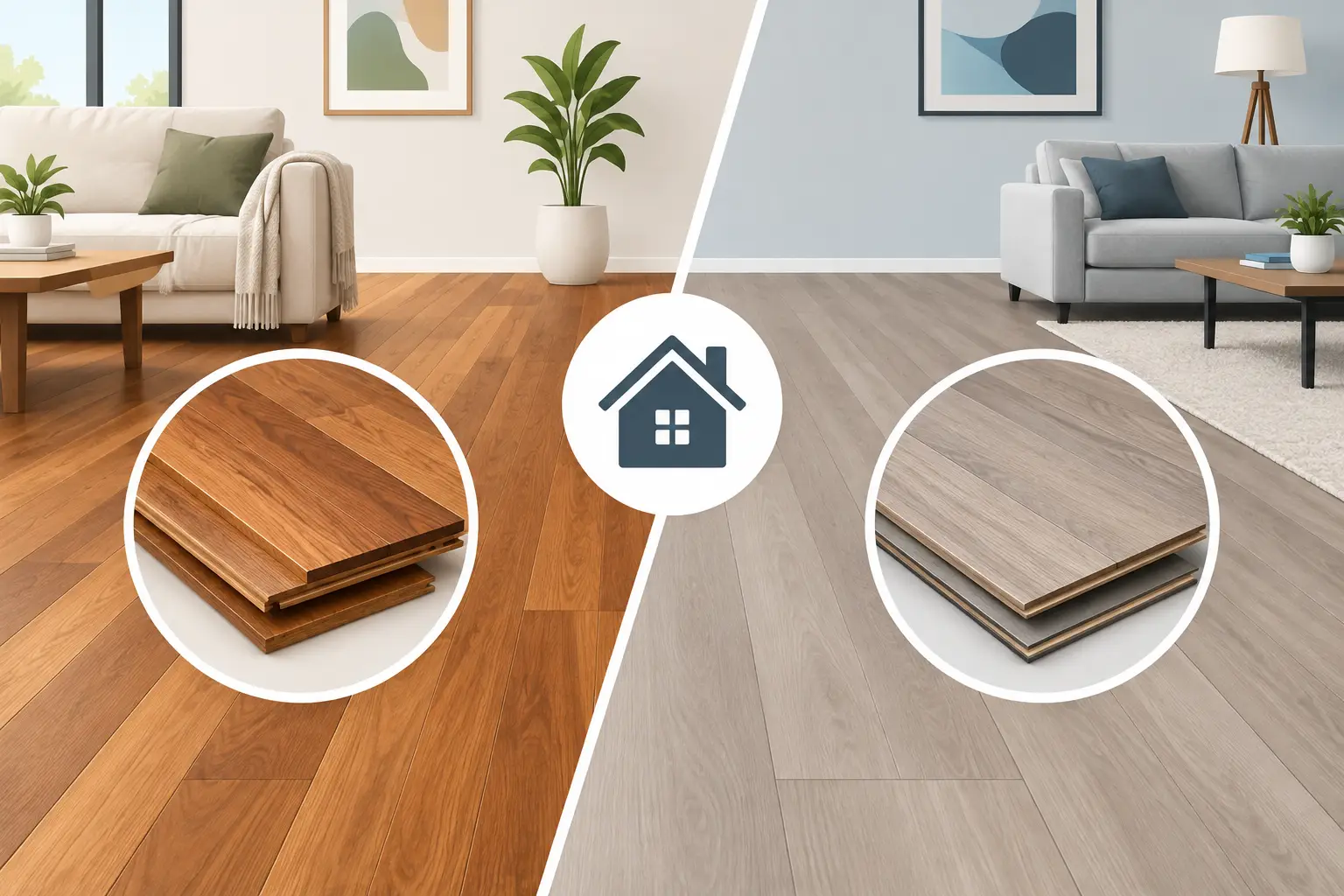
Hardwood flooring is real wood cut into planks, commonly oak, maple, hickory, or similar species. Each board has natural grain variation, and solid hardwood can usually be sanded and refinished multiple times during its life. It brings warmth, character, and long-term appeal to a home.
Laminate flooring is a layered product. Its top layer is a high-resolution image that gives the floor its wood appearance, covered by a wear layer designed to resist everyday scuffs and scratches. Beneath that surface is a dense core and backing layer that add stability. Quality laminate can look convincing from a normal standing distance, especially in wider plank styles with textured finishes.
The basic difference matters most when the floor is damaged, exposed to water, or ready for an update. Hardwood can often be repaired and refinished. Laminate is generally replaced by the plank or section because its decorative surface cannot be sanded down and restored.
Start With the Room, Not the Product
A floor that works beautifully in a formal living room may not be the best choice in a busy entryway, a basement-level space, or a rental property. Before comparing samples, consider what the room asks of the floor every day.
Hardwood is a strong fit for living rooms, dining rooms, bedrooms, hallways, and other dry areas where homeowners want a lasting material with natural detail. It also works well when matching existing wood flooring is a priority. A properly maintained hardwood floor can remain in service for decades, which makes its higher upfront cost easier to justify for many long-term owners.
Laminate is often practical for bedrooms, hallways, family spaces, and investment properties where durability and budget control lead the decision. Its wear layer can handle active households, pet traffic, and routine furniture movement well. For a homeowner updating several rooms at once, laminate may make it possible to achieve a consistent finished look without putting too much pressure on the renovation budget.
Neither material is automatically the right floor for a full bathroom or another area with frequent standing water. Some laminate products are marketed as water-resistant or waterproof, but that does not eliminate the need to manage spills quickly or protect seams. Solid hardwood is also vulnerable to moisture movement. In wet areas, tile or another moisture-focused flooring material may be the more dependable choice.
Metro Atlanta Humidity Changes the Conversation
Atlanta homes experience humid summers, changing temperatures, and occasional water issues from plumbing leaks, appliance failures, or exterior moisture. Wood naturally expands and contracts as humidity changes. Proper acclimation, correct spacing at walls, and careful installation all help hardwood perform as intended.
Laminate is more dimensionally stable than solid wood in normal conditions, but its core can swell if water reaches the joints or sits along an edge. The floor may not return to its original shape once that happens. A product label alone cannot solve a moisture problem underneath the floor.
Before either floor goes in, the installation team should assess the subfloor and identify concerns such as uneven areas, excess moisture, loose panels, old adhesive, or damage around exterior doors and plumbing. Details under the flooring affect the finished result just as much as the planks you see.
Cost: Look Beyond the Price Per Square Foot
Laminate usually costs less than hardwood for both materials and installation, although premium laminate can narrow the gap. The lower initial investment is one reason it is popular for rental turnovers, quick updates, and larger projects where several rooms need attention.
Hardwood generally costs more because the material is real wood and the installation process may require more labor. Existing flooring removal, subfloor preparation, transitions, trim work, staining, and finishing can also affect the total. If the goal is to install unfinished hardwood and create a custom stain color, the project will involve additional steps and time.
The better value depends on your plan for the property. A homeowner staying in the house for many years may see hardwood as a long-term investment because it can be refinished instead of replaced. A landlord preparing a durable, good-looking unit between tenants may prefer laminate because replacement is more predictable and the initial cost is easier to manage.
A clear estimate should separate the flooring material from preparation work, removal and disposal, underlayment, trim, transitions, and furniture-moving needs. That scope prevents the surprise costs that often appear when a floor is priced only by the room size.
Durability Is More Than Scratch Resistance
Laminate performs well against many everyday scratches and surface marks. That makes it useful in homes with children, dogs, or heavy foot traffic. It is not indestructible, however. Deep gouges, chipped edges, and water damage usually require plank replacement. Matching replacement material years later can be difficult if the product has been discontinued.
Hardwood can scratch and dent more easily than laminate, particularly softer species or darker finishes that make marks more visible. Yet hardwood has a repair advantage. Minor wear can become part of the floor's character, while deeper damage can often be repaired. When the entire surface begins to look worn, refinishing can give the room a fresh start without removing the floor.
Furniture pads, entry mats, prompt spill cleanup, and regular sweeping help either choice last longer. The best flooring material still needs reasonable care. A well-installed floor is not a substitute for managing water at doors, sinks, pet bowls, and appliances.
Appearance, Resale, and What You Can See Up Close
Hardwood has a visual depth that laminate cannot fully duplicate. Every board is unique, and the natural grain, knots, and color movement are part of the appeal. For homeowners renovating an older Atlanta home or creating a higher-end, connected look through main living areas, that authenticity often matters.
Laminate has improved significantly in texture, plank width, and finish quality. It can provide a clean wood-style appearance at a lower cost, and it offers design consistency that some homeowners prefer. Still, when viewed closely, the repeated pattern and printed grain may be noticeable in lower-grade products.
Resale is also a matter of neighborhood and buyer expectations. Hardwood is often viewed as a premium feature and may be a stronger choice in homes where buyers expect lasting finishes. Laminate is not necessarily a drawback when it is well chosen, properly installed, and appropriate for the home's price range. A poorly installed floor of any type will be more noticeable than the label on the box.
Installation Quality Protects the Investment
Flooring problems often begin below the finished surface. Uneven subfloors can cause movement, gaps, noise, or premature wear. Inadequate expansion space can create buckling. Rushing material acclimation can cause hardwood to shift after installation. Skipping moisture testing can put both hardwood and laminate at risk.
Laminate commonly uses a floating installation, meaning the planks lock together and sit over an underlayment rather than being fastened directly to the subfloor. This can make installation efficient, but the floor still needs a clean, level, dry base. Door jambs, stair transitions, baseboards, and trim details should be handled carefully so the room has a finished appearance rather than a rushed one.
Hardwood installation may involve nailing, gluing, or a combination of methods based on the product and subfloor. Solid hardwood is not suitable for every location, especially below-grade spaces or concrete slabs without the right system in place. That is why an on-site assessment matters before selecting a material.
How to Make the Final Choice
Choose hardwood when you want real wood, natural variation, future refinishing options, and a floor intended to stay with the home for many years. It is especially well suited to dry main-level living areas where appearance and long-term value are central to the project.
Choose laminate when you need a budget-conscious update with strong everyday scratch resistance, a consistent wood-look finish, and efficient coverage across multiple rooms. It can be a practical answer for busy households and rental properties, provided the room does not have ongoing moisture exposure.
Bring home samples and look at them in morning light, evening light, and beside your existing cabinets, paint, and trim. Then have the subfloor evaluated before making the final commitment. A free estimate from a local flooring team such as Plus Home Investment can clarify the preparation work, timeline, and full project scope before installation begins.
The floor you choose should fit the way you actually use the space. A careful plan, honest material comparison, and quality installation will do more for the finished result than choosing the most expensive plank in the showroom.