
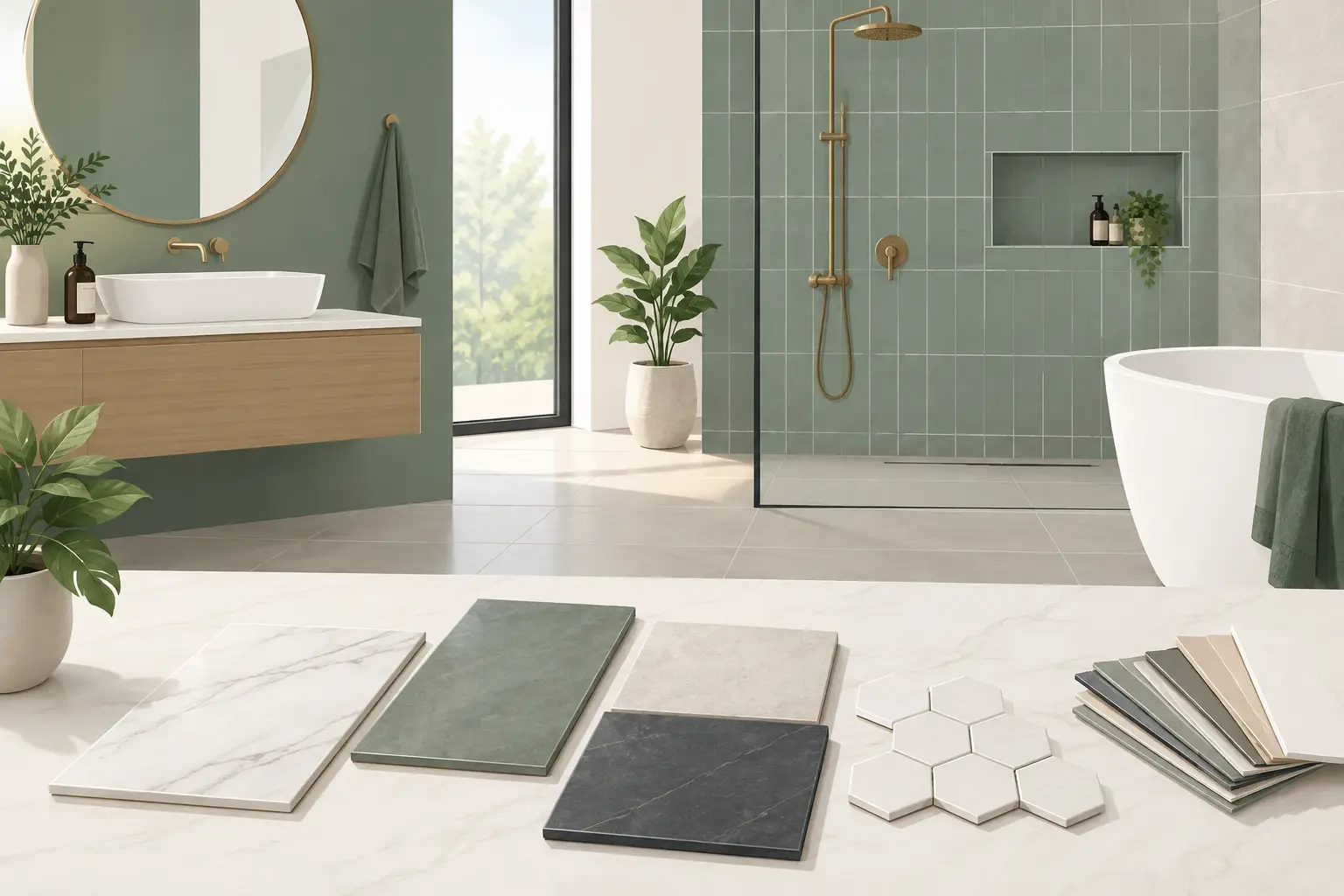
A bathroom can look finished on paper and still disappoint once the tile is installed. The color may feel colder than expected, the floor may be slick when wet, or a trendy pattern may make a small room feel crowded. Knowing how to choose bathroom tile means looking beyond a showroom sample and considering water, lighting, cleaning, layout, and the way your household actually uses the room.
Tile is one of the most visible and permanent parts of a bathroom remodel. It should work hard, look right, and support the budget for the entire project. A clear plan before materials are ordered helps prevent expensive changes later.
Start With Where the Tile Will Go
The right tile depends on the surface. A wall surround, a shower floor, a main bathroom floor, and an accent wall have different requirements. One tile may work beautifully in one location and be a poor choice in another.
For shower walls, porcelain and ceramic tile are dependable options because they resist moisture and are available in many sizes and finishes. Large-format tile can create a clean, modern look with fewer grout joints, but it requires a very flat surface and careful layout. In a shower, fewer joints can also make routine cleaning easier.
Shower floors need more attention. They should provide traction and allow water to move correctly toward the drain. Smaller mosaic tiles are often a practical choice because their additional grout lines improve grip and help the installer shape the floor around the drain. A smooth, polished large tile may look sharp in a sample board but can become slippery under bare feet.
For the main bathroom floor, choose a tile rated for floor use and consider the people using the space. A guest bathroom used occasionally has different needs than a primary bath used during busy mornings or a bathroom used by young children or older family members. Matte, textured, or slip-resistant finishes are usually the safer choice for active households.
Choose the Material Based on Performance, Not Just Appearance
Porcelain is often the strongest all-around option for bathroom floors and showers. It is dense, water-resistant, durable, and available in looks that resemble stone, concrete, wood, and handmade tile. Quality porcelain can handle heavy use without asking for the regular sealing some natural stone requires.
Ceramic tile is also a good choice, especially for bathroom walls and lower-traffic floors. It can be more budget-friendly and comes in a wide range of colors, shapes, and finishes. The key is confirming that the specific product is rated for the intended use. A wall tile is not automatically suitable for a floor.
Natural stone brings character that manufactured products cannot fully copy. Marble, travertine, slate, and limestone all have variation and depth. They also require more commitment. Stone may need sealing, certain cleaners can damage it, and some varieties show etching, staining, or wear more easily. For homeowners who want a low-maintenance bathroom, a porcelain stone-look tile often delivers a similar visual result with fewer upkeep concerns.
Glass tile works well in limited areas, such as a niche, backsplash, or decorative accent. It reflects light and adds detail, but it is not always the best material for large floor areas. Installation also requires the right setting materials and cutting methods to avoid visible backing issues or chipped edges.
Plan the Color and Finish in the Actual Room
Bathroom lighting changes tile more than most people expect. A warm beige tile can look gray under cool bulbs. Bright white tile can feel clean and open in a bathroom with natural light, but it may look stark in a small room with limited lighting. Take samples home before making a final decision and view them morning, afternoon, and evening.
For small bathrooms, lighter tile generally helps the room feel more open. That does not mean every surface must be white. Soft gray, warm taupe, pale blue, muted green, and light stone tones can add personality without closing in the space. Using the same floor tile into a curbless shower can also create a more continuous visual line, though the shower area still needs appropriate slope and slip resistance.
Darker tile can be a strong choice in larger bathrooms or for homeowners who prefer contrast. It may show soap residue, hard-water marks, and dust differently than lighter finishes, so think about cleaning before choosing a dramatic color. Polished surfaces reflect more light, while matte finishes tend to hide water spots better and provide more traction.
Size and Layout Matter as Much as the Tile Itself
Tile size affects the look of the room, the number of grout lines, and installation complexity. Large tiles can make a bathroom feel less busy, especially on broad walls and open floors. However, they create more waste when a room has many corners, doorways, or plumbing penetrations. They also demand a flatter substrate. If the wall or floor is uneven, large tile can show lippage, where one tile edge sits higher than the next.
Smaller tile offers flexibility. It fits easily around drains, niches, and curved or irregular areas. It can also bring texture and movement to a simple bathroom. The trade-off is more grout, more installation time, and more joints to clean.
Before installation begins, the layout should be planned around focal points. In a shower, the pattern should look balanced around the valve, niche, and corners. On a floor, narrow slivers of tile at a doorway or along a vanity can make an otherwise good selection look unfinished. A professional layout considers where full tiles should land and where cuts will be least noticeable.
Pattern direction matters, too. Rectangular tile can be stacked for a clean contemporary look, offset for a traditional feel, or installed vertically to make a low ceiling appear taller. Not every pattern is suitable for every tile. Some large-format tiles have manufacturer limits on offset patterns because natural variation in the tile can create uneven edges.
Do Not Treat Grout as an Afterthought
Grout changes the finished appearance more than many homeowners realize. A grout color close to the tile creates a quieter, more continuous surface. A contrasting grout highlights the pattern and individual tile shape. Neither is automatically better. It depends on whether the tile itself or the layout is meant to be the feature.
For most bathroom projects, a medium-tone grout is practical because it hides everyday dirt better than bright white and does not make the room feel as heavy as very dark grout. Ask to see grout samples next to the selected tile, not just on a color card.
Grout width should follow the tile's recommended spacing and the desired look. Very tight joints can look crisp, but they do not eliminate the need for grout or movement joints. Corners and transitions need flexible sealant, not rigid grout, because walls and floors move slightly over time.
Set a Budget That Includes the Work Behind the Tile
Tile pricing is only one part of the project cost. A low-priced tile can become expensive if it requires difficult cuts, special trim, extensive surface preparation, or a complex pattern. A premium tile may be worth the investment in a small shower niche or accent wall while a simpler porcelain handles the larger areas.
The condition of the existing bathroom also matters. Proper tile installation begins with a sound substrate, waterproofing in wet areas, and correct floor preparation. Tile and grout are not waterproof on their own. In a shower, the waterproofing system behind and beneath the tile is what protects the framing and surrounding rooms from moisture damage.
When comparing estimates, make sure the scope identifies demolition, substrate repair, waterproofing, tile layout, grout, trim pieces, and cleanup. Clear details protect the homeowner from assumptions that can lead to change orders later.
Make the Final Choice With Real-Life Use in Mind
The best bathroom tile is not always the most expensive or the most photographed option. It is the tile that fits the room, performs safely, supports the maintenance level you are comfortable with, and still looks right after years of daily use. Bring home samples, test them under your lighting, and think through wet feet, cleaning products, pets, kids, and storage before committing.
A bathroom remodel works best when the design choices and installation plan support each other. If you need help sorting through material options, layout concerns, or the condition behind existing tile, Plus Home Investment can provide a clear scope and a free estimate before the work begins.