
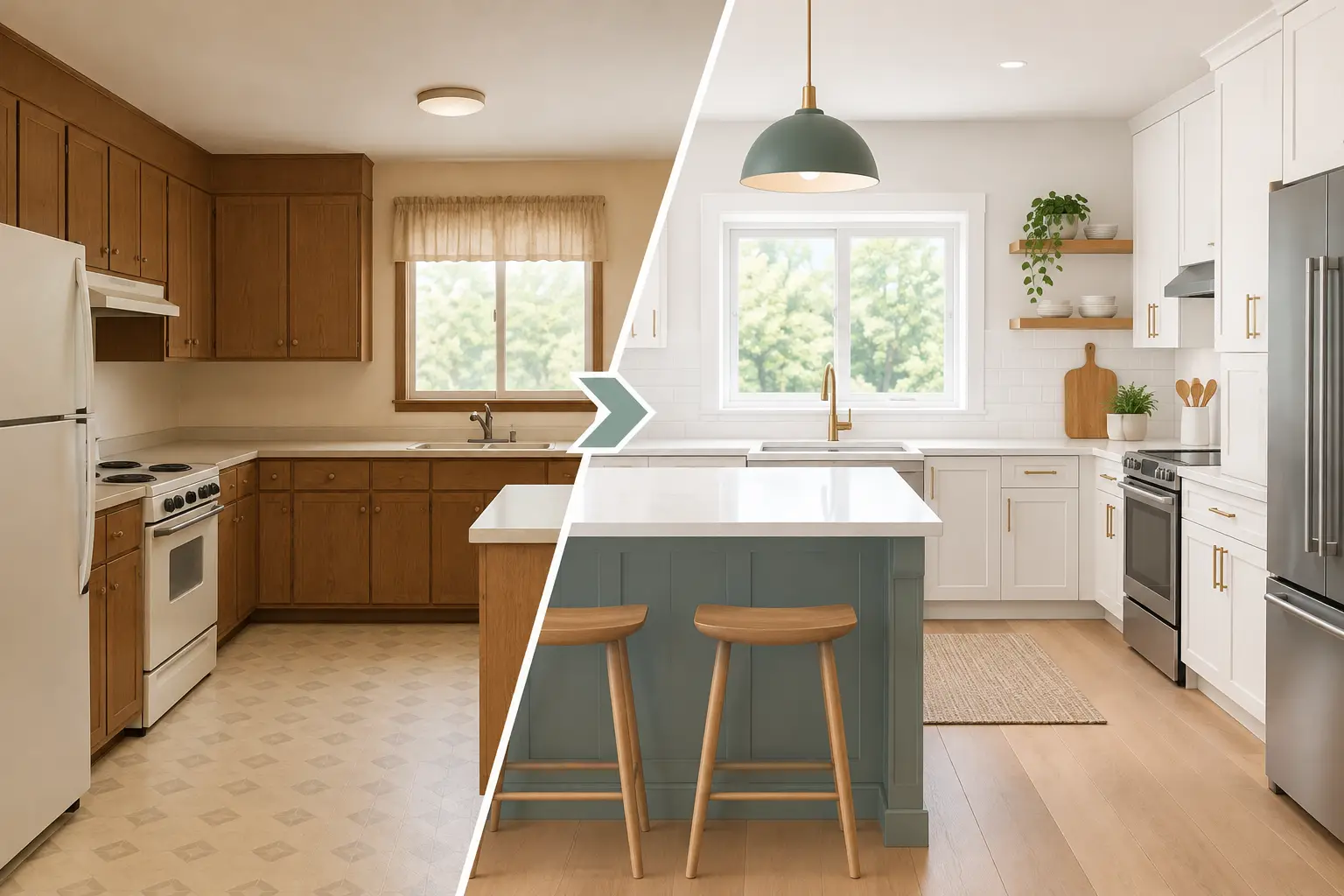
A kitchen can feel dated long before it stops functioning. Scuffed cabinet doors, tired laminate counters, poor lighting, and mismatched finishes can make the room harder to use and less enjoyable to come home to. Kitchen facelifts address those visible problems without automatically committing you to a full tear-out renovation.
For many Metro Atlanta homeowners, that is the right middle ground. You may want a cleaner, more current kitchen before moving in, renting out a property, hosting family, or putting a home on the market. A focused upgrade can improve the room's appearance and daily function while keeping the project scope, budget, and timeline easier to manage.
What a Kitchen Facelift Actually Includes
A kitchen facelift updates the surfaces and details that have the biggest visual impact. It usually keeps the existing kitchen layout and may retain cabinet boxes, appliances, and major plumbing locations when they are in sound condition.
The exact work depends on what is worth preserving. Cabinet painting or refinishing can change the entire room if the doors and boxes are solid. New countertops, a tile backsplash, flooring, fresh wall paint, updated hardware, and better lighting can make that same kitchen feel intentionally designed rather than simply old.
This approach is not a shortcut for serious construction issues. Water-damaged cabinets, soft subfloors, failing electrical work, poor ventilation, or a layout that does not support how your family uses the kitchen may call for more than surface upgrades. A clear inspection at the start helps separate cosmetic needs from repairs that should not be ignored.
Start With the Problems You Feel Every Day
The best upgrades are not always the most expensive ones. Start by identifying what frustrates you when you cook, clean, unload groceries, or gather with family. If the kitchen is dark, lighting and paint may matter more than a new floor. If counters are chipped and difficult to keep clean, a countertop replacement may be the priority. If the cabinets look worn but operate properly, painting and new pulls can provide a strong return for the investment.
It also helps to separate needs from preferences. A loose cabinet hinge, damaged tile, or stained drywall needs a repair. Wanting a warmer cabinet color or a more current backsplash is a design preference. Both are valid, but knowing the difference makes it easier to build a realistic project plan.
For rental homes and commercial break rooms, durability and easy maintenance often lead the conversation. For a long-term family home, storage, task lighting, and finishes that hold up to daily use may be more valuable than following a short-lived trend.
Keep the Existing Layout When It Works
Moving plumbing, gas lines, walls, and major electrical connections can quickly turn a facelift into a full remodeling project. Sometimes that work is necessary, especially in an older home with a cramped or unsafe layout. But if the sink, range, refrigerator, and work zones already make sense, keeping them in place can protect the budget.
A contractor can still improve the way the kitchen works without moving everything. Adding a pull-out trash cabinet, repairing drawers, replacing a damaged pantry door, adjusting cabinet doors, or creating a better transition between the kitchen and adjacent flooring can solve practical problems with less disruption.
The Upgrades That Usually Deliver the Biggest Change
Cabinets dominate most kitchens, so they deserve careful attention. Painting cabinets can be a smart option when the boxes are structurally sound and the doors have a profile worth keeping. Preparation matters more than rushing to the final color. Surfaces need proper cleaning, repair, sanding, priming, and a finish suited to kitchen use. Skipping those steps often leads to peeling paint, visible flaws, and disappointment.
Countertops are another high-impact choice. The right material depends on your budget, maintenance expectations, and how hard the kitchen works. Some homeowners want the natural variation of stone. Others prefer engineered surfaces that offer a more uniform appearance and simpler upkeep. A practical choice should fit your household, not just a photo you saved online.
A backsplash can tie a facelift together, especially when counters and cabinet color are being updated at the same time. Tile offers durability and a finished look, but the layout, grout choice, edge details, and outlet placement affect the final result. Small details matter here. Uneven cuts or careless transitions are noticeable at eye level every day.
Lighting deserves equal attention. Many older kitchens rely on one overhead fixture that casts shadows across work areas. Under-cabinet lighting, properly placed ceiling fixtures, and updated pendants over an island or peninsula can make food preparation safer and the room more welcoming. Lighting should support the way you use the space, not only the look of the fixture.
Build a Scope Before You Choose Finishes
Homeowners often start with paint colors and backsplash samples. Those choices are enjoyable, but a dependable project starts with a written scope. It should identify what will be repaired, removed, installed, protected, painted, and cleaned up. It should also clarify who is supplying materials and whether existing conditions could affect the work.
For example, replacing flooring may reveal damaged subflooring. Removing an old backsplash may expose wall damage. Cabinet painting may uncover doors that need repair or replacement. These are not reasons to avoid a project. They are reasons to plan for the possibility and communicate clearly before work begins.
A free estimate should give you more than a single number. Ask what work is included, what materials are assumed, how change requests will be handled, and what the expected schedule looks like. If you are living in the home during construction, discuss access, dust control, appliance downtime, and where your family can prepare meals while work is underway.
Choose Finishes That Work Together
A kitchen facelift looks more complete when the finishes have a clear relationship. Cabinet color, countertop pattern, backsplash, wall color, flooring, fixtures, and hardware do not need to match exactly. They do need to work in the same visual direction.
Start with the item that is hardest to change later, often the countertop or flooring. Then select cabinet color and backsplash around it. Hardware and lighting can add contrast without making the room feel busy. In smaller kitchens, too many competing colors and patterns can make the room feel tighter.
Durability should guide the final choices. Matte black hardware can look sharp, but it may show water spots in a busy kitchen. Light grout can brighten a backsplash, but it requires more upkeep near a range. Dark cabinet paint can create depth, though it may make a kitchen with limited natural light feel heavier. There is no universal best choice. The right choice is the one that fits the room and the way you live.
Know When a Facelift Is Not Enough
A cosmetic update has limits. If cabinet boxes are swollen from leaks, floors feel soft, outlets are insufficient, or walls need structural changes, a larger renovation may be the safer and more valuable path. The same applies when the kitchen's workflow is the core problem. Fresh finishes cannot fix a layout with no usable prep space or storage.
That does not mean every issue requires a complete rebuild. A coordinated contractor can assess repairs, carpentry, flooring, tile, painting, and surface upgrades as one project, then recommend a scope that addresses the real condition of the space. This avoids the common problem of completing pretty finish work only to uncover neglected repairs later.
Plus Home Investment approaches kitchen work with that practical mindset. The goal is not to sell more work than your kitchen needs. It is to listen first, define the scope clearly, and deliver details that look finished when the job is done.
Plan for a Better Kitchen, Not Just a New Look
A well-planned facelift can make an older kitchen feel cleaner, brighter, and easier to use without the cost and disruption of rebuilding everything. The strongest results come from honest decisions about what can stay, what needs repair, and which upgrades will make a difference every day.
Take a few photos of the areas that bother you most, write down the changes you want to make, and request an estimate before buying materials. A clear conversation at the beginning is the simplest way to protect your budget and move forward with confidence.