
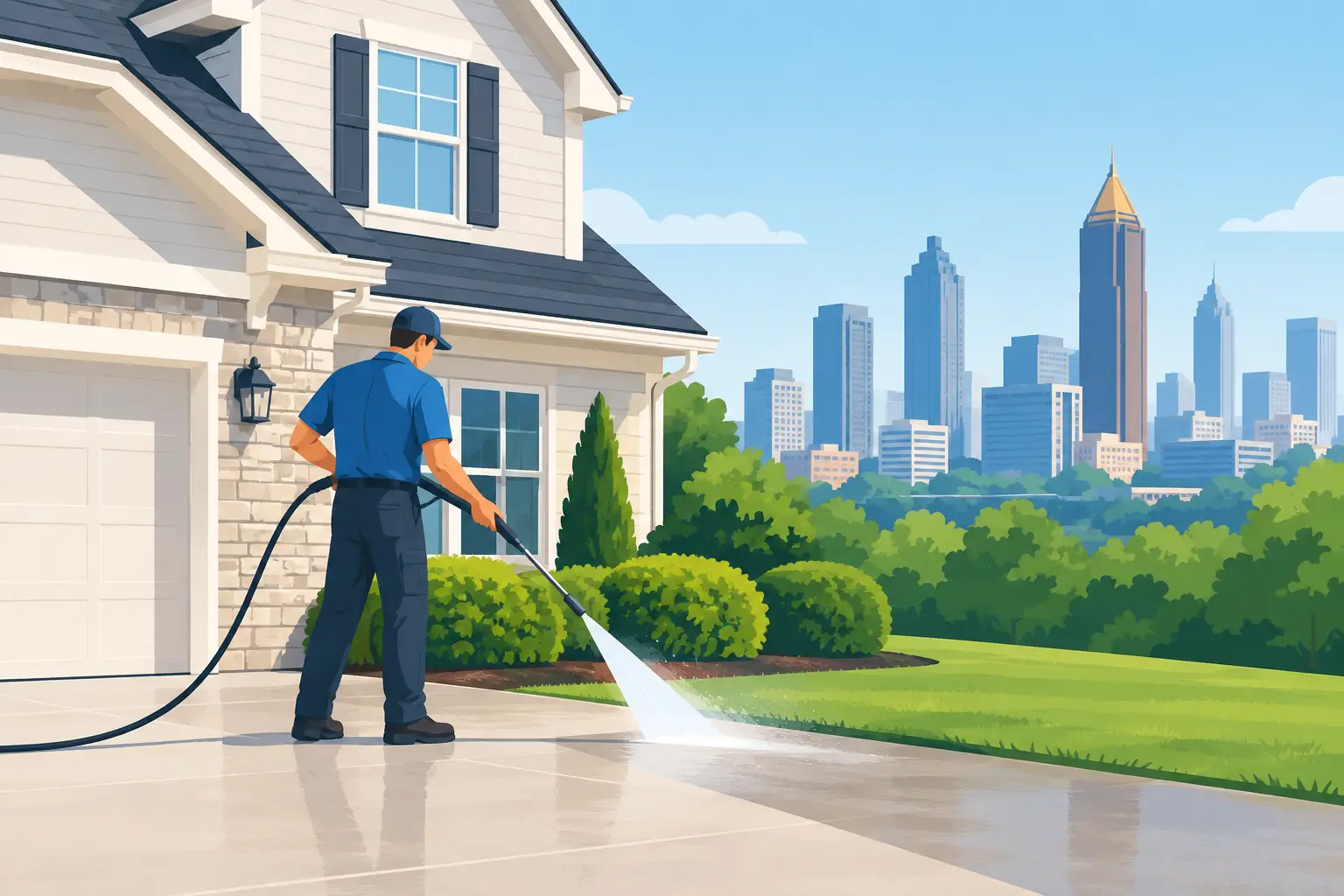
A gray-green film on siding is not always dirt. Around Metro Atlanta, humidity, tree cover, pollen, and frequent rain create ideal conditions for mildew, algae, and staining to build up on exterior surfaces. Pressure washing can make a property look cared for again, but the best results come from matching the cleaning method to the material - not simply using more force.
For homeowners preparing to paint, sell, host family, or catch up on exterior maintenance, a professional cleaning can be one of the most visible improvements you can make in a day. The goal is a clean, even finish that protects the surfaces you already own.
What pressure washing can clean well
Pressure washing is effective on durable exterior materials that collect embedded dirt and organic growth. Concrete driveways, sidewalks, brick walkways, patio slabs, retaining walls, and many fences can benefit from a properly planned wash. It can also restore the appearance of decks, porches, gutters, exterior trim, and siding when the correct pressure, nozzle, cleaning solution, and technique are used.
The work is not just about appearance. Algae can make steps, walkways, and pool-deck areas slippery. Buildup around entrances can make an otherwise well-maintained property look neglected. On a commercial property, dirty sidewalks and stained storefront areas can shape a customer’s first impression before they walk through the door.
A clean exterior also gives you a better view of the condition beneath it. Once the dirt is removed, homeowners often spot loose caulk, failing paint, cracked concrete, damaged boards, or areas that need repair. That makes pressure washing a practical first step before exterior painting, deck work, carpentry repairs, or a broader upgrade.
Pressure washing is not the same on every surface
High pressure has its place, especially on concrete and masonry. But more pressure is not automatically better. Vinyl siding, painted wood, stucco, older brick, composite decking, and roof surfaces each require a different approach. A contractor should adjust the water pressure, spray pattern, working distance, and cleaning products based on what is being cleaned.
For example, siding commonly needs a lower-pressure wash combined with an appropriate cleaning solution. Spraying too closely can force water behind panels, strip oxidation unevenly, loosen paint, or damage window and door seals. Wood decks need even more care. Aggressive washing can raise the grain, create visible wand marks, or gouge soft boards, leaving a rough surface that needs additional sanding and refinishing.
Roofs deserve special caution. Pressure washing asphalt shingles can remove protective granules and shorten the roof’s service life. Roof staining is often better addressed with a low-pressure cleaning method designed for roofing material. If a company proposes treating every exterior surface with the same high-pressure setting, ask questions before the work begins.
Where Metro Atlanta properties need it most
The right schedule depends on shade, surrounding trees, drainage, traffic, and the exterior material. A home under heavy tree cover may need more frequent cleaning than a sunny home on an open lot. Properties near construction activity or busy roads can develop a noticeable layer of dust faster than expected.
For many Metro Atlanta homes, an annual exterior assessment is a practical starting point. You may not need every surface washed every year, but it helps to check the driveway, front walk, siding, patio, deck, and entry areas before buildup becomes difficult to remove. Spring is popular because pollen is visible and homeowners are preparing outdoor spaces. Late summer or early fall can also be a good time to clear mildew growth after the wet season.
Pay close attention to north-facing walls, shaded steps, areas below gutters, and concrete near landscaping. These locations tend to stay damp longer, which encourages algae and mildew. If walkways are slick after rain or the siding has dark streaks that return quickly, it is time to address the cause as well as the visible stain. Improving drainage, trimming back vegetation, or repairing a leaking gutter may reduce repeat buildup.
Preparing for a professional cleaning
A good result starts before water hits the surface. Move vehicles from the driveway, clear patio furniture and decorations, and make sure gates are unlocked if access is needed. Contractors should protect nearby plants, cover or avoid sensitive exterior features when appropriate, and take care around outlets, light fixtures, cameras, and doorbell equipment.
Close windows and doors securely. If you know of a loose screen, damaged window seal, cracked siding panel, or other existing issue, point it out during the estimate. Clear communication helps the crew plan around vulnerable areas and keeps expectations realistic.
It also helps to discuss the scope in plain terms. Are you looking for the driveway and sidewalks only? Do you want house washing, deck cleaning, porch cleaning, or patio work included? Is the cleaning part of a larger project, such as exterior painting or deck repair? A clear scope prevents the common surprise of assuming a service includes every outdoor surface when it does not.
Why low price is not always the best value
Pressure washing seems simple until damage shows up. Etched concrete, splintered deck boards, streaky siding, stripped paint, dead landscaping, and water intrusion can turn a low-cost cleaning into a repair project. The lowest quote may leave out surface preparation, cleaning solutions, plant protection, stain treatment, or the extra time required for a difficult area.
A dependable estimate should identify what will be cleaned and how the crew plans to handle delicate materials. It should also acknowledge limits. Deep rust, oil, efflorescence, permanent discoloration, oxidation, and old paint failures may improve with cleaning but may not disappear completely. Honest expectations are part of quality workmanship.
For properties with several needs, coordinating services can save time and reduce disruption. Cleaning a deck before repairs and staining, washing exterior surfaces before painting, or addressing drainage concerns before recurring mildew are examples of work that benefits from planning in the right order. Plus Home Investment can help homeowners connect these details into one practical project plan rather than treating every issue as a separate headache.
When to call instead of renting a machine
A rental machine can be useful for a small, durable concrete area when you understand the equipment and the surface condition. It is less forgiving when the job involves a two-story home, steep terrain, older exterior finishes, wood, elevated decks, electrical fixtures, or stubborn biological growth. The cost of rental equipment, cleaning products, protective gear, and your time can also narrow the savings.
Professional service is especially worthwhile when you are preparing for painting or selling a home. Clean surfaces improve curb appeal, but they also help painting contractors identify failing areas and apply coatings to a properly prepared exterior. If paint is peeling, caulk is failing, or trim is soft, washing alone is not the fix. Those repairs should be handled before a finish coat is applied.
A cleaner exterior starts with the right plan
Pressure washing works best as regular property care, not a rushed response after years of buildup. Start with the surfaces that affect safety, curb appeal, and the condition of nearby materials. Then choose a method that respects the age and type of each surface.
If your driveway, siding, porch, patio, or walkways need attention, ask for a clear scope and a free estimate before the work starts. A careful cleaning can refresh the way your property looks now and make the next repair or improvement easier to plan.