
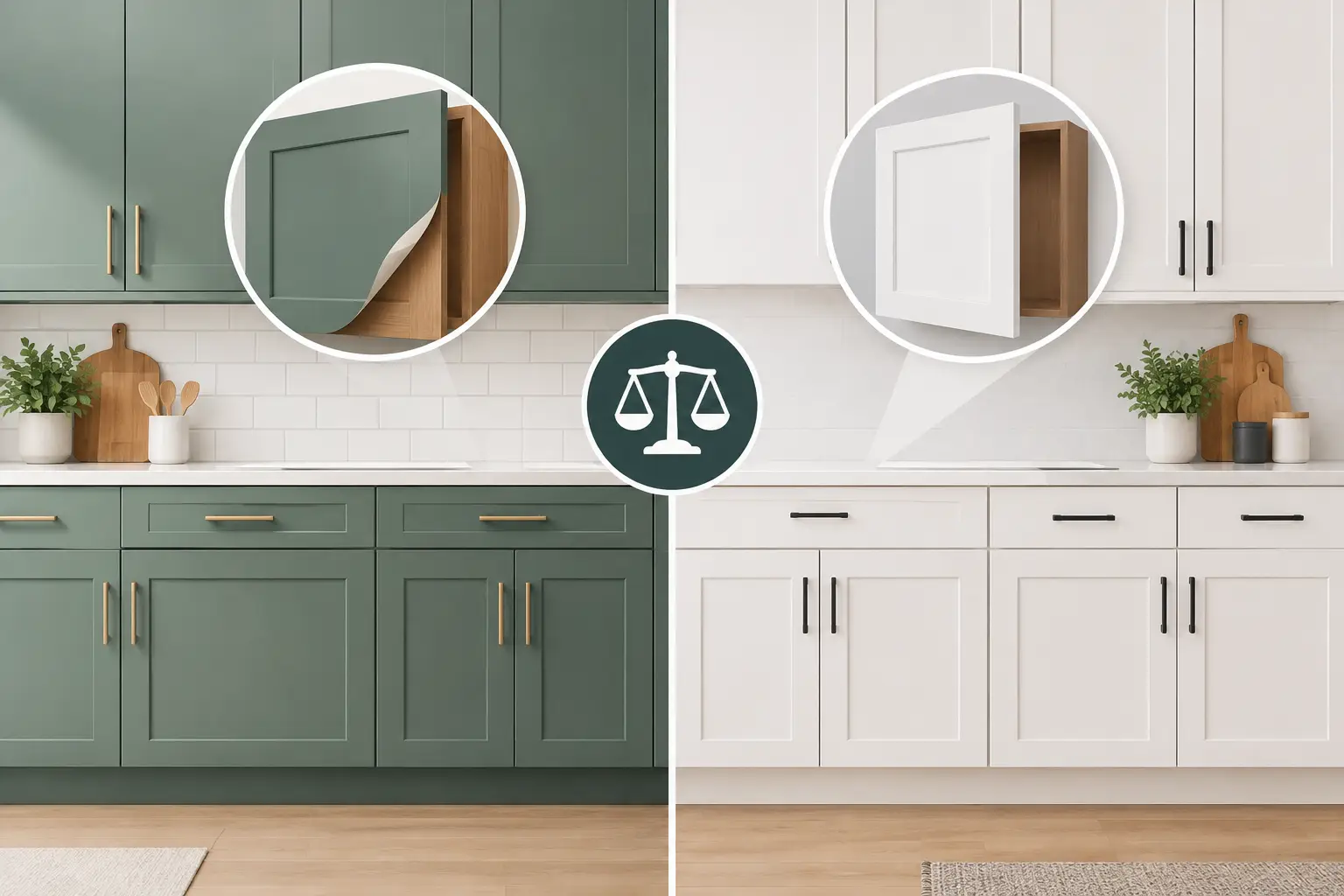
A kitchen can look dated long before it stops working. Worn door finishes, loose hinges, mismatched drawer fronts, and an old cabinet style can make the entire room feel tired. When homeowners weigh refacing versus replacing cabinet doors, the right answer depends less on the latest color trend and more on what is happening behind those doors.
The cabinet boxes, layout, moisture history, and your long-term plans all matter. A door-only update can be a smart, budget-conscious improvement. In other cases, a proper cabinet refacing project or full replacement protects you from spending money on a surface fix that will not last.
Refacing Versus Replacing Cabinet Doors: The Real Difference
Replacing cabinet doors means removing existing doors and drawer fronts, then installing new ones on the current cabinet boxes. Depending on the project, this can also include new hinges, pulls, soft-close hardware, and adjustments to get consistent reveals around every door. It is a targeted update when the cabinet boxes are sound and their exposed surfaces still fit the desired look.
Cabinet refacing is a broader finish upgrade. The old doors and drawer fronts are replaced, but the visible face frames, end panels, and often the front edges of cabinet boxes receive a new veneer, laminate, or matching finish material. Refacing is designed to make the whole cabinet system look coordinated, not like new doors were added to older boxes.
Full cabinet replacement removes the existing cabinets and installs new units. This creates the most freedom for layout changes, storage upgrades, cabinet height changes, and major style shifts. It also creates more work, more disruption, and usually a higher project cost.
The terms are often used interchangeably, but they are not the same scope. A clear estimate should spell out exactly what is being replaced, what is being refinished or covered, and what stays in place.
Start With the Cabinet Boxes
Cabinet doors are only as good as the boxes supporting them. Before choosing a finish or door profile, inspect the cabinet construction honestly.
Solid, level boxes with no water damage are good candidates for new doors or refacing. Look inside the sink base, where slow plumbing leaks can swell particleboard and weaken the bottom panel. Check for loose joints, sagging shelves, peeling laminate, bowed side panels, or cabinets pulling away from the wall. These problems do not disappear when attractive new doors are installed.
Older cabinets can still be worth saving. Many homes have well-built plywood or solid-wood cabinet boxes that are stronger than homeowners assume. If they are structurally sound, an updated front can deliver a major visual change without the expense of a full kitchen tear-out.
Replacement makes more sense when boxes are damaged, poorly built, or no longer meet the household's needs. A growing family may need deeper drawers, a better pantry setup, or cabinets that accommodate modern appliances. If the current layout creates traffic problems or wastes usable space, changing doors will not solve the real issue.
When Replacing Doors Is the Better Choice
New cabinet doors are often the practical choice when you like the existing cabinet color or the cabinet boxes have finished sides that still look good. It works especially well for homeowners who want to move from raised-panel doors to a cleaner Shaker profile, update an outdated oak look, or replace damaged doors without disturbing countertops, flooring, or backsplash tile.
This approach can also be useful for rental properties and light commercial spaces where appearance needs to improve, but the room cannot be out of service for an extended renovation. The project scope is controlled, and there is less demolition to manage.
Still, matching matters. A bright new painted door can make yellowed cabinet frames look even older. Wood species and stain colors can also vary from one product line to another. If the existing face frames will remain visible, bring home samples and view them in the actual kitchen light before making a final selection.
Hardware is part of the decision, not an afterthought. New doors may require different hinge boring, and soft-close hinges need enough clearance to operate correctly. A contractor should check the overlay, door swing, drawer clearance, and alignment before ordering materials. Details matter because uneven gaps and rubbing doors can make quality materials look poorly installed.
When Cabinet Refacing Is Worth It
Refacing is a strong option when the layout works, the cabinet boxes are in good shape, but the visible exterior has reached the end of its useful life. It gives the kitchen a more complete, uniform transformation than doors alone because the frames and exposed ends are brought into the new finish plan.
For example, a homeowner may want crisp white Shaker doors, updated drawer fronts, new pulls, and a coordinated finish around the cabinet frames. Refacing can create that finished appearance without removing cabinets that are still structurally sound.
The trade-off is that refacing requires careful prep and skilled installation. Face-frame surfaces must be clean, stable, and properly prepared for the selected material. Corners, end panels, and transitions around appliances need precise work. A rushed refacing job can show seams, lifting edges, or inconsistent color over time.
Refacing is not the best solution for every cabinet style. Cabinets with extensive water damage, weak frames, or awkward dimensions may require replacement instead. It is also less useful if you plan to move walls, relocate plumbing, add an island, or significantly change appliance locations. Once the kitchen is already opening up for structural remodeling, it is worth evaluating the full cabinet plan.
Cost Is About Scope, Not Just the Door Price
Homeowners often compare the price of one new door with the cost of a full cabinet package and assume the lower number tells the whole story. It does not. The final investment includes measuring, material quality, door construction, drawer fronts, hinges, hardware, installation, adjustments, finish work, and any repairs discovered along the way.
Door replacement can cost less because it preserves more of the existing cabinet system. Refacing costs more than doors alone because it includes additional finish materials and labor on the cabinet frames. Full replacement usually costs the most, particularly when it involves demolition, disposal, wall repairs, electrical changes, plumbing work, countertops, or a new layout.
The lowest quote is not always the best value. Ask whether the scope includes removal of old doors, new soft-close hardware, cabinet-box repairs, finished end panels, touch-ups, and final alignment. A detailed scope prevents the frustrating surprise of finding out that the estimate covered doors but not the work needed to make them look properly installed.
Plan the Update Around the Rest of the Kitchen
Cabinet work affects more than cabinets. New door thicknesses and overlays can change clearances near a refrigerator, dishwasher, wall oven, or island. A countertop that is staying in place may limit how much cabinet modification is practical. Existing backsplash tile can also be damaged if cabinets are removed or shifted.
This is why planning helps. Decide early whether you are keeping the counters, changing the backsplash, updating flooring, repainting walls, or adding new lighting. A coordinated plan reduces rework and helps the finished room look intentional.
For Metro Atlanta homes, moisture deserves attention as well. Kitchens experience steam, spills, and humidity, especially around sink cabinets and exterior walls. Correcting small leaks, improving ventilation, and addressing damaged materials before installing new finishes will protect the investment.
A Simple Way to Make the Decision
Choose replacement doors when your cabinet boxes are solid, their visible frames remain presentable, and you want a focused style update. Choose refacing when those boxes are solid but the visible frames and ends need the same fresh finish as the new doors. Choose full cabinet replacement when damage, storage limitations, or layout problems are driving the project.
The best first step is not choosing a color. It is getting an accurate assessment of the cabinets you already have. Plus Home Investment can review the condition, discuss the work around your kitchen surfaces and finishes, and provide a clear, free estimate built around what the space actually needs.
A well-planned cabinet update should make daily life easier, not just improve a listing photo. Start with sound construction, choose a scope that fits your goals, and let the finish details carry the room the rest of the way.