
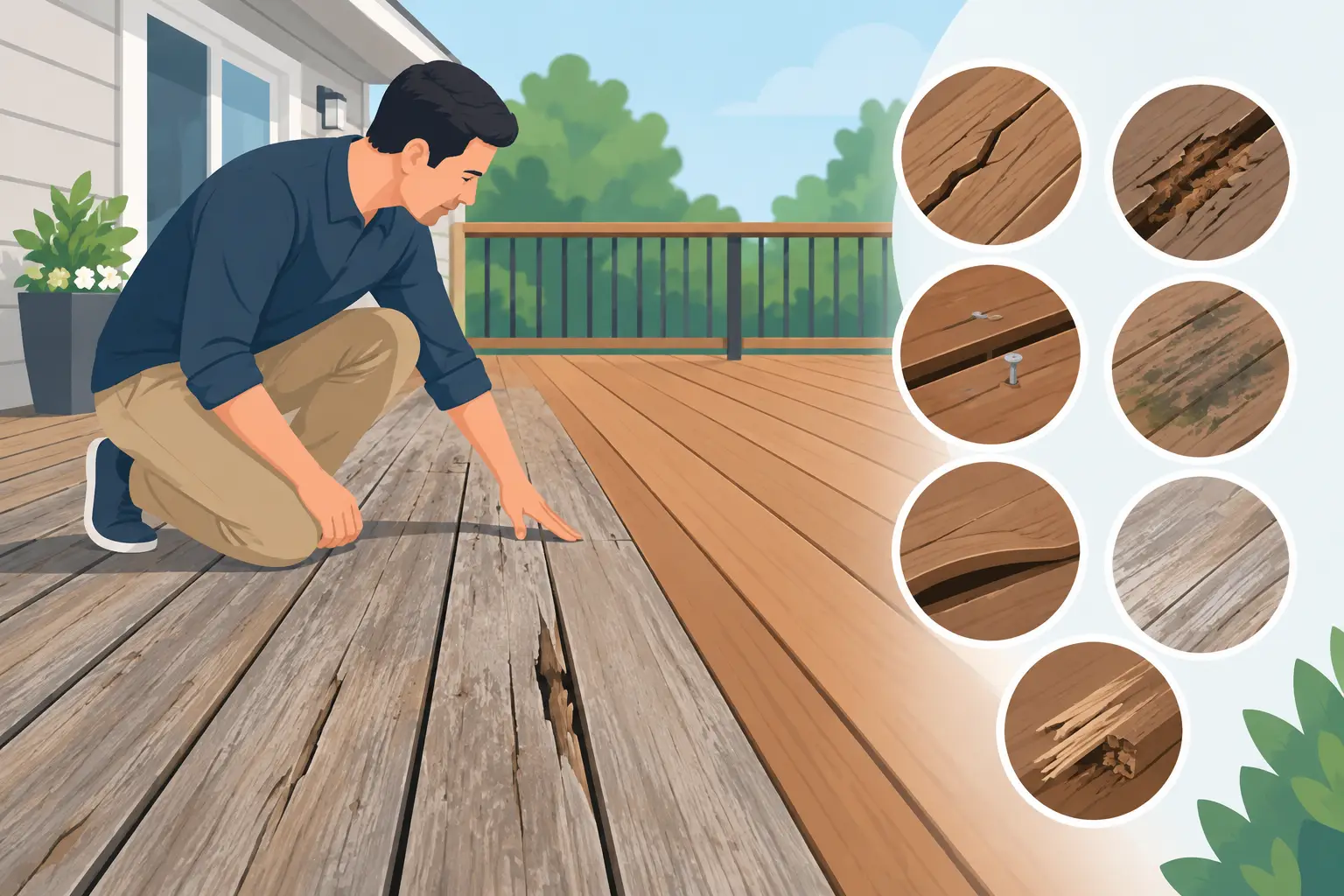
A deck can look acceptable from the yard while becoming unsafe underfoot. Knowing when to replace deck boards helps you address moisture damage, loose surfaces, and worn materials before a small repair turns into a larger structural project. For Metro Atlanta homeowners, heat, humidity, heavy rain, and frequent use can all shorten the life of exposed wood.
Not every crack means your whole deck needs to come apart. In many cases, replacing a few damaged boards restores a clean, solid walking surface. The key is separating surface wear from signs that the framing below may also need attention.
When to Replace Deck Boards Instead of Repairing Them
Deck boards are the visible, walkable surface of the deck. They take the most direct exposure to sun, rain, furniture, grills, foot traffic, and standing water. A board with minor discoloration or a shallow surface split may be repairable with cleaning, sanding, and sealing. A board that has lost its strength should be replaced.
Start by checking the areas that stay damp longest: near planters, below downspouts, around stairs, beside the house, and under outdoor rugs. Press on suspicious boards with your foot. Wood that feels soft, spongy, or noticeably flexible deserves a closer look. Do not assume a fresh coat of stain will solve decay.
1. The Wood Feels Soft or Crumbles at the Surface
Soft spots are one of the clearest signs of rot. Use a screwdriver to gently probe a discolored area, especially around fasteners and board ends. If the tip sinks into the wood easily, the board may no longer have enough material to safely carry normal foot traffic.
Surface checking, which looks like small cracks along the grain, is common in aging wood. Rot is different. It often produces dark staining, soft fibers, crumbling edges, or wood that stays wet long after surrounding boards have dried. Replace affected boards rather than covering the problem with paint or deck stain.
2. Cracks, Splits, or Warping Create a Trip Hazard
A small hairline crack is not always urgent. But deep splits, raised edges, curling boards, and wide gaps can catch a shoe heel, snag bare feet, or create weak points around screws. Boards that cup or twist may also hold water against the framing below, which speeds up deterioration.
One or two warped boards can usually be removed and replaced. If warping appears across most of the deck, consider the cause before ordering materials. Poor drainage, inadequate ventilation, incorrect board spacing, or failing framing can make new boards wear out too quickly.
3. Fasteners No Longer Hold Securely
Loose nails, popped screws, and rust-stained fastener holes are more than appearance issues. Repeated movement around a loose fastener can enlarge the hole and weaken the board. In some cases, the board is still sound and can be refastened properly. In others, the wood around the fastener has split or decayed enough that replacement is the better option.
Pay attention to any board that rocks when stepped on. A contractor should determine whether the problem is limited to the deck board or whether the joist beneath it has damage. Simply adding another screw will not correct compromised framing.
4. Boards Have Extensive Rot at the Ends
Board ends are especially vulnerable because they absorb moisture and often sit close to trim, posts, stairs, or the deck edge. End rot can spread farther into a board than it first appears. If an end is soft, cracked apart, or badly darkened, replacing the full board is usually more dependable than cutting out a short section.
A full-board replacement also gives the installer a chance to inspect the joists where moisture may have collected. That matters because a deck surface is only as reliable as the structure supporting it.
5. Mold, Mildew, and Stains Return Quickly
Atlanta's humid climate makes mildew common on shaded decks. Mildew on its own does not always mean the boards need replacement. A professional cleaning and appropriate sealer may be enough when the wood is firm and the stains are superficial.
The concern rises when dark staining is paired with softness, persistent dampness, peeling finish, or widespread board deterioration. If growth returns quickly after cleaning, look for the moisture source. A leaking gutter, poor grading, dense landscaping, or insufficient airflow may need correction along with the board repair.
6. The Deck Surface Has Become Uneven
An uneven deck can result from warped boards, but it can also point to a bigger issue. Sagging sections, a change in slope, or noticeable movement near posts and stairs should not be treated as a simple cosmetic concern. Those conditions can involve joists, beams, footings, or connections to the house.
Do not replace surface boards until the underlying cause has been evaluated. New boards installed over sagging or damaged framing will not make the deck safe. They can also hide an issue that becomes more expensive later.
7. Repairs Are Becoming Constant
Replacing a board or two is practical when the rest of the deck remains solid. The decision changes when each season brings more soft spots, loose boards, popped fasteners, or areas that need patching. At that point, piecemeal repairs may cost more over time than replacing the deck surface in one coordinated project.
A larger repair can also improve the finished look. New boards installed with consistent spacing and clean transitions create a more uniform surface than a deck made up of many mismatched patches. If you are considering staining or painting, it is often smarter to complete needed wood repairs first.
Can You Replace Only a Few Deck Boards?
Yes, if the damage is isolated and the framing is in good condition. A targeted replacement works well when most boards are firm, level, and securely fastened. Matching the existing board size, profile, and material is important, especially on a visible deck surface. New pressure-treated wood may also look lighter than older boards until it weathers or is finished.
Partial replacement is less effective when boards are nearing the same age and showing similar wear. If several boards have rot, cracking, or warping, more may fail soon after the first repair. A site inspection helps determine whether selective board replacement, full re-decking, or structural repair is the most sensible scope.
Check the Deck Structure Before Replacing Boards
Removing damaged deck boards offers a valuable view of the framing. Joists should be checked for rot, insect damage, splitting, and weakened areas around hardware. The ledger board, where a deck connects to the house, needs particular attention. Problems there are not a do-it-yourself patch job.
Also inspect railings, stairs, posts, and the areas where posts meet the ground or concrete. A deck can have attractive new boards and still be unsafe if its connections or support system are failing. This is why a clear scope matters. The right project may involve board replacement only, or it may call for carpentry repairs before new decking is installed.
How to Plan a Deck Board Replacement Project
Start with a practical assessment of the deck's condition and how you use the space. Think about whether you want a straightforward repair, a refreshed appearance, or an upgrade that will support heavier use for years ahead. The material choice affects cost, maintenance, appearance, and installation details.
Pressure-treated lumber remains a practical option for many homeowners and can be repaired board by board. Composite decking requires less routine staining but has a higher upfront cost and may be harder to blend into an existing wood deck. Neither choice solves a drainage or framing problem underneath.
Before work begins, clear furniture, planters, and grills from the deck. Discuss how damaged materials will be removed, whether nearby landscaping needs protection, and what finish work is included. A detailed estimate should make it clear whether the scope covers deck boards alone or also includes joist repairs, railing work, stairs, sealing, or painting.
If you are unsure whether the issue is surface wear or structural damage, do not wait for a board to fail. A careful inspection gives you a clear path forward and keeps the project focused on the work your deck actually needs. Plus Home Investment helps Metro Atlanta property owners plan deck repairs with practical recommendations, quality craftsmanship, and clear communication from the first estimate through the finished work.